
Renfrewshire ranked joint second in Scotland for positive destinations of school leavers
February 27, 2026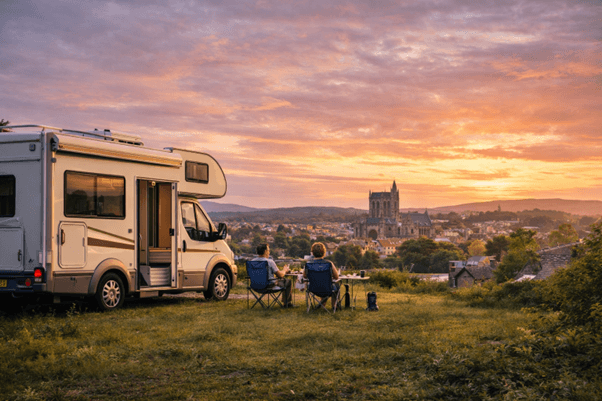
Introduction
Motorhome tourism is a form of travel in which a motorhome serves as both transport and accommodation, and it matters because it redistributes visitor spending to places that traditional hotel tourism often overlooks.
Rather than concentrating nights and meals in major city centres, motorhome tourism enables spending to be distributed across historic high streets, heritage sites, cafés, and independent shops.
In recent years, UK staycation trends and flexible travel habits have encouraged more people to explore closer to home.
Motorhomes offer autonomy, cost control, and flexible planning, making them ideal for modern travellers.
Historic towns like Paisley sit perfectly within this pattern.
They offer compact heritage, walkable centres, and cultural depth, making them ideal day stops or short stays along wider touring routes.
This article examines the drivers behind growing motorhome tourism, Paisley’s rising appeal to touring visitors, the resulting economic impacts, the associated challenges, and strategies for communities to manage this trend effectively.
What Is Motorhome Tourism and Why Is It Growing in the UK?
Motorhome tourism is travel in which a self-contained vehicle provides sleeping, cooking, and transport functions, and it is growing because it combines mobility with independence.
Travellers can move between destinations without fixed hotel bookings, reducing risk and increasing flexibility.
People choose scenic routes, avoid peak pricing, and flex schedules without hassles or complicated cancellations.
Motorhome travel also encourages travellers to create loops with character-rich towns.
This routing logic directly benefits heritage towns.
When travellers plan journeys around cultural landmarks, events, and walkable centres, places like Paisley become natural additions to the itinerary rather than accidental detours.
Why Are Historic Towns Like Paisley Attracting More Motorhome Visitors?

Historic towns attract motorhome visitors with their concentrated cultural value and manageable footprints.
A touring visitor often wants meaningful experiences without long transfers between sites.
Paisley offers architectural heritage, museum spaces, and a distinct identity linked to its textile history.
These features transform a simple stop. Accessibility also plays a major role.
A town that sits close to major roads yet feels distinct from larger cities can function as a flexible stopover.
Motorhome travellers prioritise predictability.
Clear road access, understandable parking rules, and walkable centres reduce stress and increase dwell time.
When these elements align, the town becomes more than a waypoint.
It becomes a highlight.
Paisley’s Heritage and Cultural Appeal
Heritage tourism is travel motivated by historical, architectural, and cultural interest, and it fits here because motorhome visitors often plan routes around meaningful destinations.
Paisley’s abbey, museums, and traditional streetscape provide narrative depth that touring visitors seek.
Heritage creates structure.
It defines walking routes, shapes spending decisions, and encourages time spent in local businesses.
A strong heritage core also reduces planning friction.
Visitors can park once and explore on foot, which aligns perfectly with touring patterns.
Accessibility and Location Advantages
Paisley attracts touring visitors because it combines cultural identity with convenient access, which makes it easy to include in a regional route.
Proximity to larger urban hubs increases its visibility without overwhelming its scale.
Time efficiency matters to touring travellers.
They prefer destinations where several experiences fit into a single afternoon.
Vehicle planning also influences behaviour.
Travellers browsing options on platforms such as The Motorhome Trader often consider vehicle size, layout, and parking flexibility before mapping routes that include heritage towns.
When vehicle choice aligns with town infrastructure, the visit feels seamless.
What Economic Impact Does Motorhome Tourism Have on Local Communities?

Motorhome tourism contributes to the economy by distributing visitor spending across multiple small businesses rather than concentrating it in accommodation providers.
Touring visitors still purchase meals, tickets, retail items, and fuel, but the pattern spreads across the day.
The economic model is incremental.
Each vehicle may represent modest spending, yet repeated visits and shoulder-season travel can stabilise local trade.
Motorhome visitors also tend to explore beyond main streets.
They walk side streets, discover independent shops, and engage with community events.
The result is diversified revenue.
Cafés benefit in the morning, museums at midday, and retailers throughout the afternoon.
This pattern can strengthen town resilience.
Instead of relying on a few large seasonal peaks, communities gain steadier flows of visitors.
How Do Motorhome Visitors Spend Their Money?
Motorhome visitors spend across essential services and leisure experiences.
Their purchasing behaviour often combines practicality with cultural curiosity.
Below are five common spending categories:
- Food and drink: cafés, bakeries, pubs, takeaway options
- Local attractions: museums, exhibitions, guided tours
- Independent retail: crafts, books, gifts, markets
- Fuel and services: petrol stations, supplies, minor repairs
- Events and festivals: ticketed cultural and seasonal programming
This distribution supports a wide business base rather than a single sector.
What Are the Main Benefits of Motorhome Tourism for Historic Towns?
Motorhome tourism delivers several key advantages, most notably broader economic spread and stronger off-peak resilience.
Its flexibility allows visits during shoulder seasons and on weekdays, helping smooth seasonal volatility.
There are six primary benefits:
- Strengthen high-street footfall by increasing daily visitors.
- Extend tourism seasons beyond traditional peaks.
- Diversify visitor demographics with varied spending patterns.
- Support cultural venues through spontaneous attendance.
- Encourage repeat visits via touring loops.
- Boost local events by adding flexible, last-minute audiences.
These benefits compound over time.
Even modest increases in touring traffic can stabilise small business ecosystems.
What Are the Challenges and Limitations of Motorhome Tourism?
Motorhome tourism also presents challenges, particularly around space management and perception.
Without planning, parking pressure and congestion can create friction.
Five main limitations appear most frequently:
- Reduce parking availability when bays are not designed for larger vehicles.
- Increase the risk of congestion on narrow heritage streets.
- Strain waste and service facilities if underprovided
- Trigger resident frustration when rules are unclear.
- Concentrate wear on sensitive urban areas.
These issues are manageable but require proactive design and communication.
How Can Historic Towns Adapt to Welcome Motorhome Visitors?

Welcoming motorhome visitors requires structured planning that balances access with community wellbeing.
There are six practical steps that towns can follow.
- Define dedicated parking zones with clear time limits.
- Provide or coordinate access to essential service points.
- Design walkable visitor routes linking parking to heritage sites
- Partner with local businesses for incentives and guidance
- Communicate rules clearly through signage and digital channels.
- Monitor visitor impact and gradually adjust policies.
Step 1: Improve Parking and Overnight Facilities
Motorhome parking provision is the structured allocation of spaces suitable for larger touring vehicles, and it fits here because parking determines visitor experience.
Clear bay sizing, signage, and time policies reduce conflict.
Small pilot schemes often work best.
They allow towns to gather data before expanding provision.
Step 2: Partner With Local Businesses
A local partnership initiative coordinates businesses to guide visitor spending and behaviour, which fits here because economic capture depends on connection.
Maps, discount schemes, and shared messaging convert parked vehicles into walking customers.
Visibility tools can enhance communication.
A strategically placed LED display solution can promote heritage events, wayfinding messages, or seasonal activities, improving visitor orientation without adding clutter.
Partnerships turn infrastructure into opportunity.
How Does Motorhome Tourism Compare to Traditional Hotel-Based Tourism?
Motorhome tourism and hotel tourism differ in spending distribution, reliance on infrastructure, and seasonal behaviour.
Motorhome travel spreads spending across businesses, while hotel stays concentrate spending near accommodation hubs.
Motorhome tourism relies on parking and signage.
Hotel tourism relies on room inventory and staffing.
Motorhome visitors often plan shorter stops but may revisit more frequently.
Hotel visitors tend to book longer, fixed stays.
| Factor | Motorhome Tourism | Hotel Tourism |
| Spend pattern | Distributed across town | Clustered near hotels |
| Infrastructure need | Parking and services | Rooms and hospitality staff |
| Seasonal flexibility | Strong shoulder-season | Peak-season dependent |
| Visitor planning | Flexible route-based | Fixed booking-based |
Each model supports local economies differently.
Is Motorhome Tourism Sustainable for Historic Towns?
Motorhome tourism can be sustainable when infrastructure, visitor behaviour, and policy align.
Environmental sustainability depends on waste management and traffic planning.
Economic sustainability depends on whether spending reaches independent businesses.
Social sustainability depends on resident comfort and clear rules.
Responsible travel behaviour is central.
Visitors who respect quiet hours, dispose of waste correctly, and support local venues contribute positively to town life.
When managed carefully, the model integrates with heritage preservation rather than undermining it.
What Does the Future Hold for Motorhome Tourism in Towns Like Paisley?
Motorhome tourism is likely to remain a steady feature of UK domestic travel.
Flexible travel habits and digital route planning continue to support touring behaviour.
Vehicle innovation and improved mapping tools may further reduce friction.
Towns that clarify access and communicate clearly will benefit most.
Paisley and similar heritage towns have an opportunity.
By designing thoughtful infrastructure and strengthening business partnerships, they can convert touring routes into lasting community value.
Conclusion
Motorhome tourism is a mobility-driven travel model that redistributes visitor spending into towns that combine accessibility with heritage identity.
Historic towns like Paisley benefit when touring visitors find clear parking, walkable centres, and engaging cultural experiences.
The economic advantages are real, especially for independent businesses and shoulder-season resilience.
The challenges are equally real but manageable through structured planning.When towns align infrastructure, communication, and community priorities, motorhome tourism becomes a complementary form of travel rather than a competing one.
Handled responsibly, it brings new visitors, broader spending, and renewed attention to the stories that historic towns have always carried.